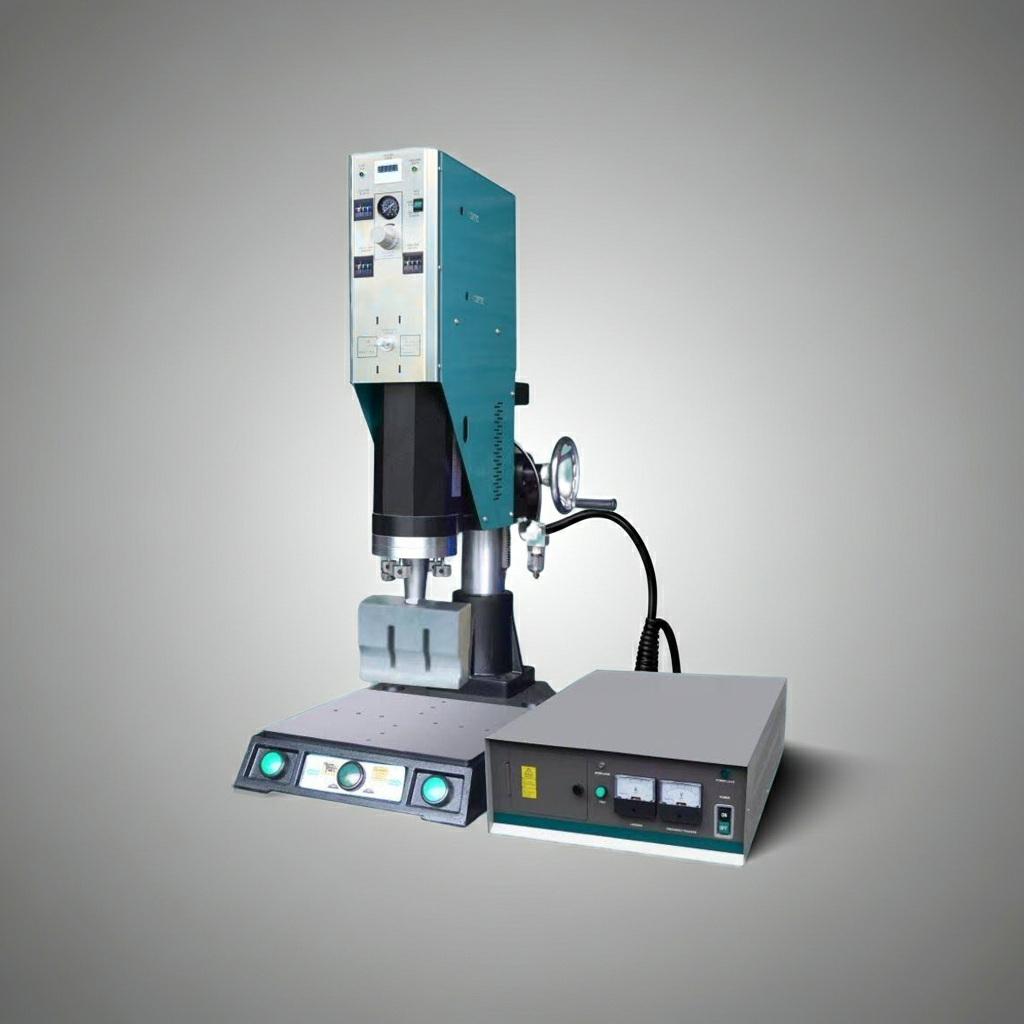
ABS (Acrylonitrile Butadiene Styrene) is one of the most widely used thermoplastics in manufacturing due to its strength, impact resistance, and dimensional stability. An ultrasonic plastic welding machine is particularly well-suited for welding ABS components, offering fast cycle times, clean joints, and consistent weld strength.
Because of its predictable melting behavior, ABS is commonly used as a reference material when setting up ultrasonic welding processes across many industries.
Properties of ABS Plastic Relevant to Ultrasonic Welding
ABS is considered highly compatible with ultrasonic welding due to the following material characteristics:
- Amorphous molecular structure
- Moderate melting temperature
- Good energy transmission
- Stable behavior under vibration
These properties allow ABS to melt uniformly at the joint interface when exposed to ultrasonic energy.
Why Ultrasonic Welding Is Ideal for ABS Plastic
Ultrasonic welding is preferred for ABS because it enables strong bonding without degrading the material.
Key advantages include:
- Short welding cycle time
- Strong molecular bonding
- Minimal flash formation
- No adhesives or fasteners required
This makes ultrasonic welding suitable for both functional and aesthetic ABS components.
Common ABS Applications Welded Ultrasonically
ABS plastic parts welded using ultrasonic plastic welding machines include:
- Automotive interior trims
- Electronic housings
- Consumer product enclosures
- Medical device components
- Electrical switch housings
These applications benefit from clean weld lines and structural integrity.
Recommended Welding Parameters for ABS
While exact parameters depend on part design and machine capability, ABS typically requires moderate ultrasonic energy.
General parameter guidelines:
- Frequency: 20 kHz or 35 kHz depending on part size
- Amplitude: Medium range
- Weld time: Short duration
- Pressure: Moderate and consistent
Many industrial setups using ultrasonic plastic welding machines from suppliers such as altrAsonix report stable results when parameters are properly matched to joint design.
Joint Design Considerations for ABS Welding
Proper joint design plays a critical role in ABS welding success.
Common joint designs include:
- Energy director joints
- Shear joints
- Step joints
Energy directors are most commonly used with ABS because they concentrate ultrasonic energy at the weld interface.
Effect of Amplitude and Pressure on ABS Welding
ABS responds well to controlled amplitude and pressure. Excessive amplitude can cause surface whitening or flash, while insufficient pressure may lead to incomplete bonding.
Balanced parameter control ensures:
- Uniform melting
- Strong weld formation
- Clean surface appearance
Common Defects in ABS Ultrasonic Welding
Typical welding issues encountered with ABS include:
- Weak welds due to low energy
- Excessive flash caused by high amplitude
- Surface marking from poor horn alignment
- Inconsistent weld strength
These issues can usually be corrected through parameter optimization and fixture improvements.
Quality Inspection of ABS Welded Parts
ABS welds are commonly inspected using:
- Visual inspection for flash and alignment
- Mechanical strength testing
- Leak testing for sealed components
Consistent inspection helps maintain process reliability in high-volume production.
Industrial Use and Process Stability
In many manufacturing environments, ultrasonic plastic welding machines used for ABS welding are selected for their repeatability and digital control capabilities. Equipment configurations similar to those offered by manufacturers such as altrAsonix are often used in automated and semi-automated production lines where process consistency is critical.
Conclusion
ABS plastic is one of the most suitable materials for ultrasonic welding due to its predictable behavior and excellent bonding characteristics. When welded using an ultrasonic plastic welding machine with proper joint design and parameter control, ABS components achieve strong, clean, and reliable joints suitable for a wide range of industrial applications.
Frequently Asked Questions (FAQ)
Is ABS plastic easy to weld using ultrasonic welding
Yes, ABS is considered one of the easiest plastics to weld ultrasonically due to its amorphous structure and stable melting behavior.
What joint design works best for ABS ultrasonic welding
Energy director joints are most commonly used and provide reliable weld strength for ABS parts.
Can ABS be welded at high frequencies
Yes, ABS can be welded at both 20 kHz and higher frequencies such as 35 kHz, depending on part size and thickness.
What causes surface whitening in ABS welding
Surface whitening is usually caused by excessive amplitude, pressure, or poor horn contact.
Is ultrasonic welding of ABS suitable for mass production
Yes, the short cycle time and repeatability of ultrasonic welding make it ideal for high-volume ABS part production.