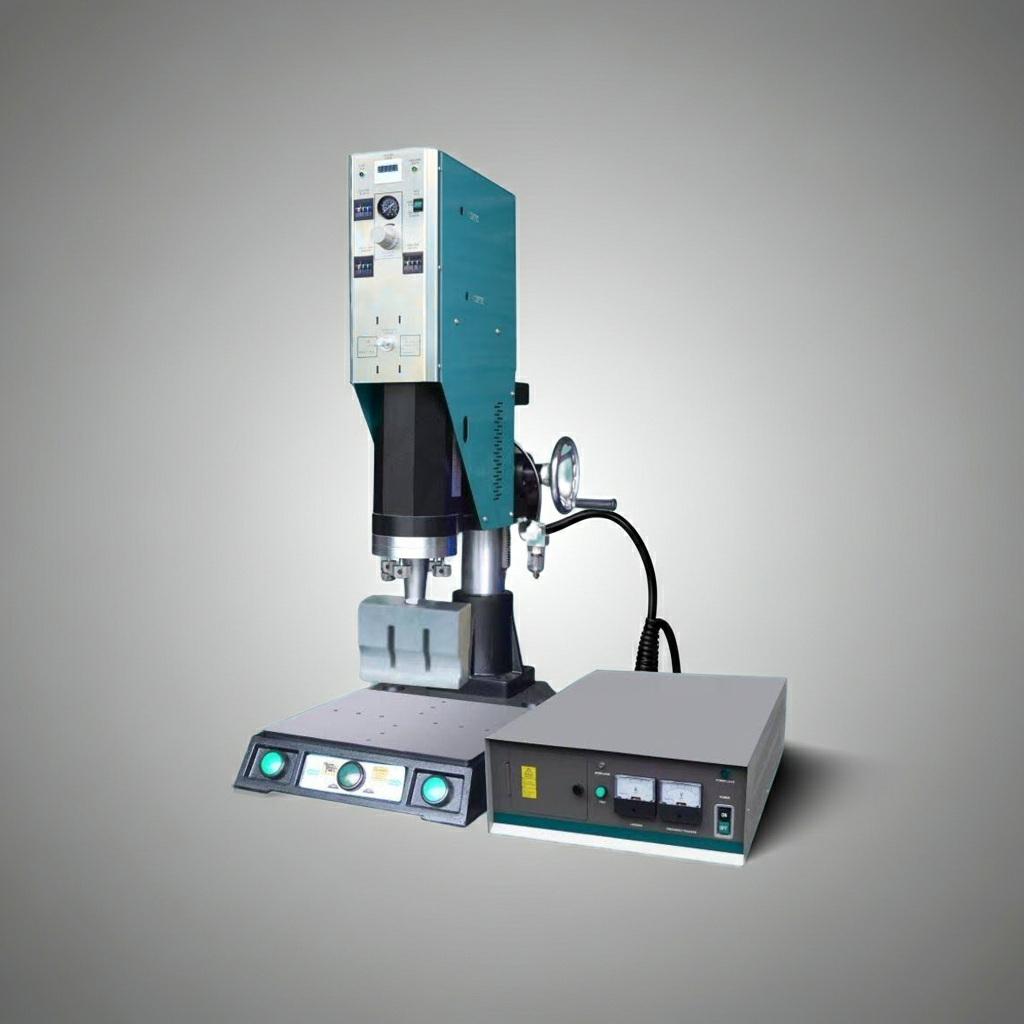
An ultrasonic plastic welding machine is widely used in modern manufacturing for joining thermoplastic components with high precision and reliability. The process uses high-frequency mechanical vibrations to generate localized heat at the joint interface, enabling fast and strong molecular bonding without the use of adhesives or fasteners.
Due to its efficiency and consistency, ultrasonic plastic welding is commonly applied in industries such as automotive, electronics, medical devices, packaging, and consumer goods.
What Is an Ultrasonic Plastic Welding Machine
An ultrasonic plastic welding machine operates by converting electrical energy into high-frequency mechanical vibrations, typically between 20 kHz and 40 kHz. These vibrations are transmitted through a horn (sonotrode) to plastic components held under pressure. The friction and molecular excitation at the joint interface cause the plastic to melt and fuse, forming a durable bond once cooled.
Key Advantages of Ultrasonic Plastic Welding Machine
1. Fast Welding Cycle Time
Ultrasonic plastic welding completes a weld cycle within fractions of a second, making it ideal for high-volume production environments.
Key benefits include:
- Increased production throughput
- Reduced assembly time
- Improved manufacturing efficiency
2. Strong and Consistent Weld Quality
The ultrasonic welding process creates a molecular bond between plastic parts, resulting in high-strength and repeatable welds.
Advantages of weld quality include:
- Uniform weld strength
- Minimal variation between parts
- Reduced rejection rates
3. No Requirement for Consumables
Ultrasonic plastic welding does not require adhesives, solvents, screws, or rivets. This significantly reduces operating costs and eliminates dependency on consumable materials.
4. Energy-Efficient Welding Process
Energy is applied only during the welding cycle, unlike continuous heating methods such as hot plate welding.
Energy efficiency benefits:
- Lower electricity consumption
- Reduced heat loss
- Cost-effective long-term operation
5. Clean and Environmentally Friendly Process
The ultrasonic plastic welding process produces no fumes, flames, or chemical emissions. This makes it suitable for clean-room and environmentally regulated manufacturing environments.
6. Easy Integration with Automation
Ultrasonic plastic welding machines can be integrated into automated assembly lines and robotic systems, supporting modern manufacturing requirements such as Industry 4.0.
7. Excellent Aesthetic Finish
The process produces clean weld lines with minimal flash or surface damage, which is especially important for visible consumer products and medical housings.
8. Wide Compatibility with Thermoplastics
Common thermoplastics compatible with ultrasonic welding include:
- ABS
- Polypropylene (PP)
- Polycarbonate (PC)
- Nylon (PA)
- PMMA
This wide compatibility increases the versatility of ultrasonic plastic welding machines.
Industrial Applications of Ultrasonic Plastic Welding
Ultrasonic plastic welding machines are widely used in:
- Automotive interior and electronic components
- Medical devices and disposable products
- Electrical and electronic housings
- Packaging and sealing applications
- Consumer goods manufacturing
Limitations of Ultrasonic Plastic Welding
Although highly effective, ultrasonic plastic welding has certain limitations:
- Applicable only to thermoplastics
- Requires proper joint design
- Sensitive to incorrect parameter settings
These limitations can be minimized with proper design, machine selection, and process control.
Conclusion
The ultrasonic plastic welding machine offers significant advantages in modern manufacturing, including high-speed operation, strong and consistent weld quality, energy efficiency, and compatibility with automation. Its clean and cost-effective process makes it an ideal solution for manufacturers seeking reliable and scalable plastic joining technology.
Frequently Asked Questions (FAQ)
What plastics can be welded using an ultrasonic plastic welding machine
Thermoplastics such as ABS, polypropylene, polycarbonate, nylon, and PMMA are commonly suitable for ultrasonic plastic welding.
Is ultrasonic plastic welding stronger than adhesive bonding
Yes, ultrasonic plastic welding often provides stronger and more consistent joints than adhesive bonding because it creates a direct molecular bond between plastic parts.
Does ultrasonic plastic welding require high energy consumption
No, ultrasonic plastic welding is energy-efficient as power is applied only during the welding cycle.
Can ultrasonic plastic welding machines be automated
Yes, these machines are highly compatible with automated and robotic production lines.
Is ultrasonic plastic welding safe for operators
When proper safety guidelines are followed, ultrasonic plastic welding is considered safe, as it produces no open flames or harmful fumes.
What industries commonly use ultrasonic plastic welding machines
Automotive, medical, electronics, packaging, and consumer goods industries extensively use ultrasonic plastic welding machines.