How Mobile Charger Housings Are Made Using Ultrasonic Welding
Have you ever opened a mobile charger and noticed that there are no screws, no glue, and no visible joints?
Almost every branded charger today — including chargers for Samsung, Vivo, Oppo, Apple, Xiaomi, and more — is joined using ultrasonic plastic welding.
This technology creates a strong, clean, and secure bond that is far better than glue or screws.
If you want to understand how charger manufacturers achieve this perfect finish, this guide explains the full process in the simplest way possible.
Why Are Modern Mobile Chargers Welded Ultrasonically?
Mobile chargers must be:
- Strong enough to handle drops
- Safe for high temperature and daily use
- Compact with no extra space for screws
- Clean without glue leakage
- Durable in long-term usage
Ultrasonic welding meets all these requirements perfectly.
It creates a permanent bond that doesn’t open even after years of use.
What Parts of a Charger Are Welded?
A charger has two main body parts:
- Front casing
- Back casing
Both parts are placed together, and ultrasonic welding melts only the joint line and fuses them into a single piece.
This is why charger bodies look like one solid box without any joint lines.
How Ultrasonic Welding Joins the Charger Body
Here is the step-by-step process that almost every charger manufacturer follows:
Step 1: Designing the Charger Body with Energy Director
The plastic mold of the charger casing includes a small triangular ridge called an Energy Director.
This ridge concentrates ultrasonic vibrations so the plastic melts exactly at that line.
Without this ridge, welding may not happen properly.
Step 2: Placing Internal Components
The PCB, transformer, capacitor, ICs, and wiring are placed inside the two halves of the charger casing.
Once everything is aligned correctly, the two halves are ready for welding.
Step 3: Positioning Under the Ultrasonic Welding Machine
The operator places the charger in a custom fixture/jig.
This holds the charger in position and ensures precise alignment.
Step 4: Ultrasonic Welding Cycle Starts
Once the start button is pressed:
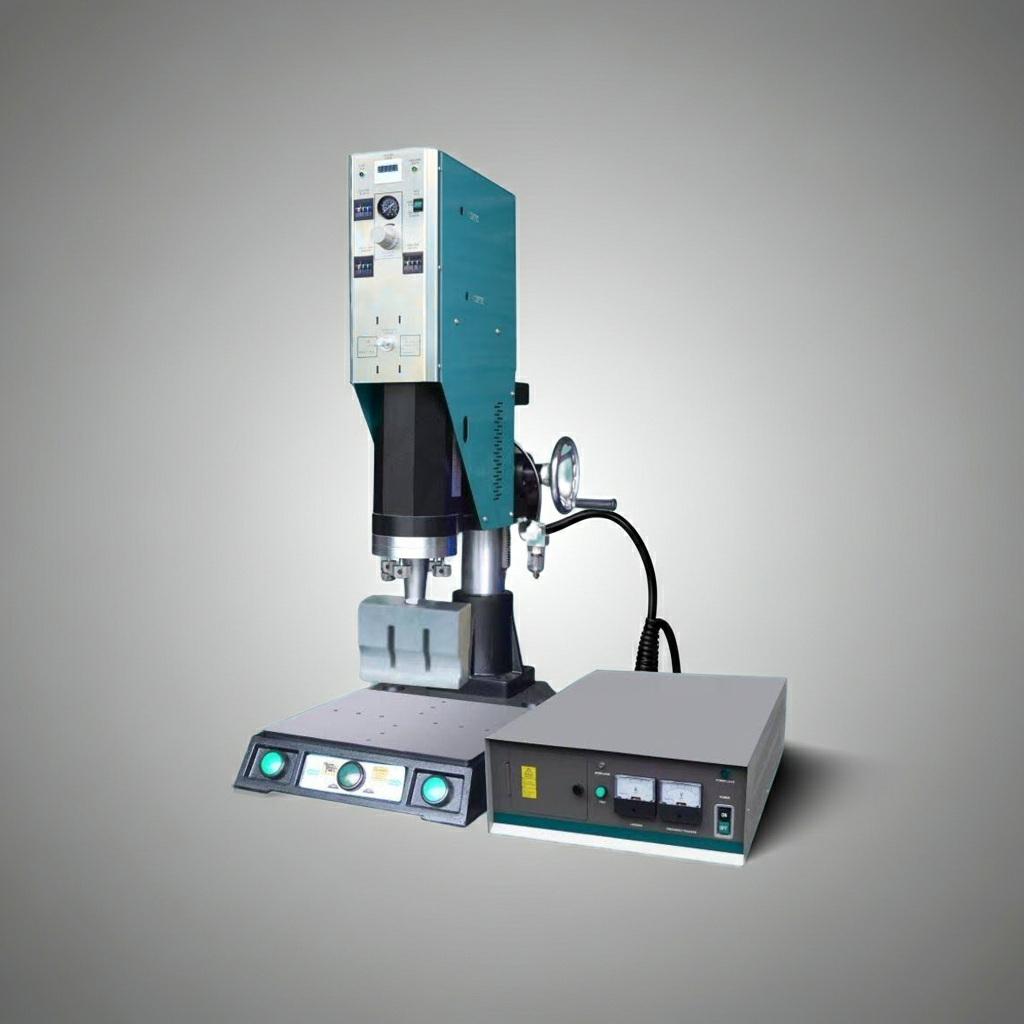
- The horn (sonotrode) comes down
- Vibrations pass into the plastic
- The energy director melts
- Both halves fuse together
- The horn lifts automatically
The entire weld process takes less than 1 second.
Step 5: Cooling and Final Finish
After welding, the charger is taken out of the fixture.
The weld line becomes clean and strong, giving the charger a premium, seamless finish.
No glue.
No screws.
No manual trimming.
Just a smooth, factory-finish joint.
Why Ultrasonic Welding Is the Best Choice for Mobile Chargers
✔ Extremely fast — welds in less than a second
✔ Very strong bonding — cannot open easily
✔ Clean finish — no glue marks or visible joints
✔ Safe for heat-sensitive internal components
✔ Perfect for mass manufacturing
✔ Reduces cost of screws, glue, and extra labor
This is why almost every major power adapter and mobile charger manufacturer depends on ultrasonic welding.
Applications Beyond Mobile Chargers
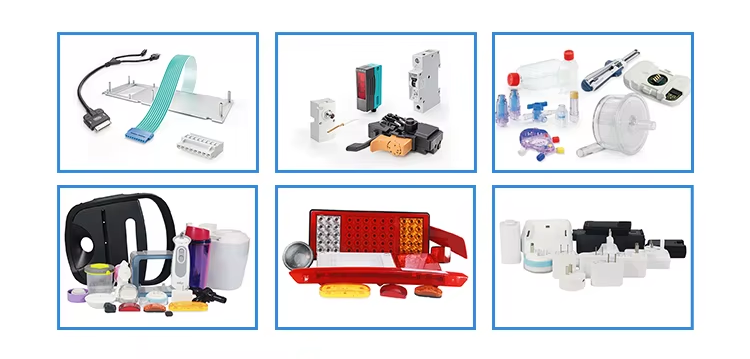
Ultrasonic welding is also used to assemble many other electronic products, such as:
Power banks
The upper and lower casings of power banks are welded using ultrasound to achieve a uniform look and strong bonding, ensuring that the power bank remains durable during drops and daily use.
Smart home devices
Products like Wi-Fi routers, smart switches, LED drivers, and IoT controllers are joined using ultrasonic welding to ensure electrical safety and long-term performance.
Electronic adapters and converters
Laptop adapters, set-top box adapters, and CCTV power supply casings are welded to ensure vibration resistance and a professional finish without screws.
Earbud charging cases
The small and delicate construction of earbud cases requires precise welding, which ultrasonic welding provides without damaging internal batteries.
Electric gadget housings
From trimming machines to Bluetooth speakers, ultrasonic welding creates strong, lightweight enclosures that look modern and premium.
What Machines Are Used for Charger Welding?
Most charger factories use:
- 20 kHz Ultrasonic Plastic Welding Machine – 2000W / 2600W
- Customized horn and fixture for each charger model
- Benchtop vertical ultrasonic welding setup
The power and frequency depend on the material and wall thickness of the charger casing.
If you want help selecting the right machine, you can contact us anytime.
Planning to Start Charger Manufacturing?
You can purchase professional ultrasonic welding machines from:
👉 altrAsonix – www.altrasonix.com
(Direct manufacturer of ultrasonic welding machines)
If you want job work welding services such as charger welding, power bank welding, or electronics enclosure welding, visit:
👉 altrAsonix.in – www.altrasonix.in